







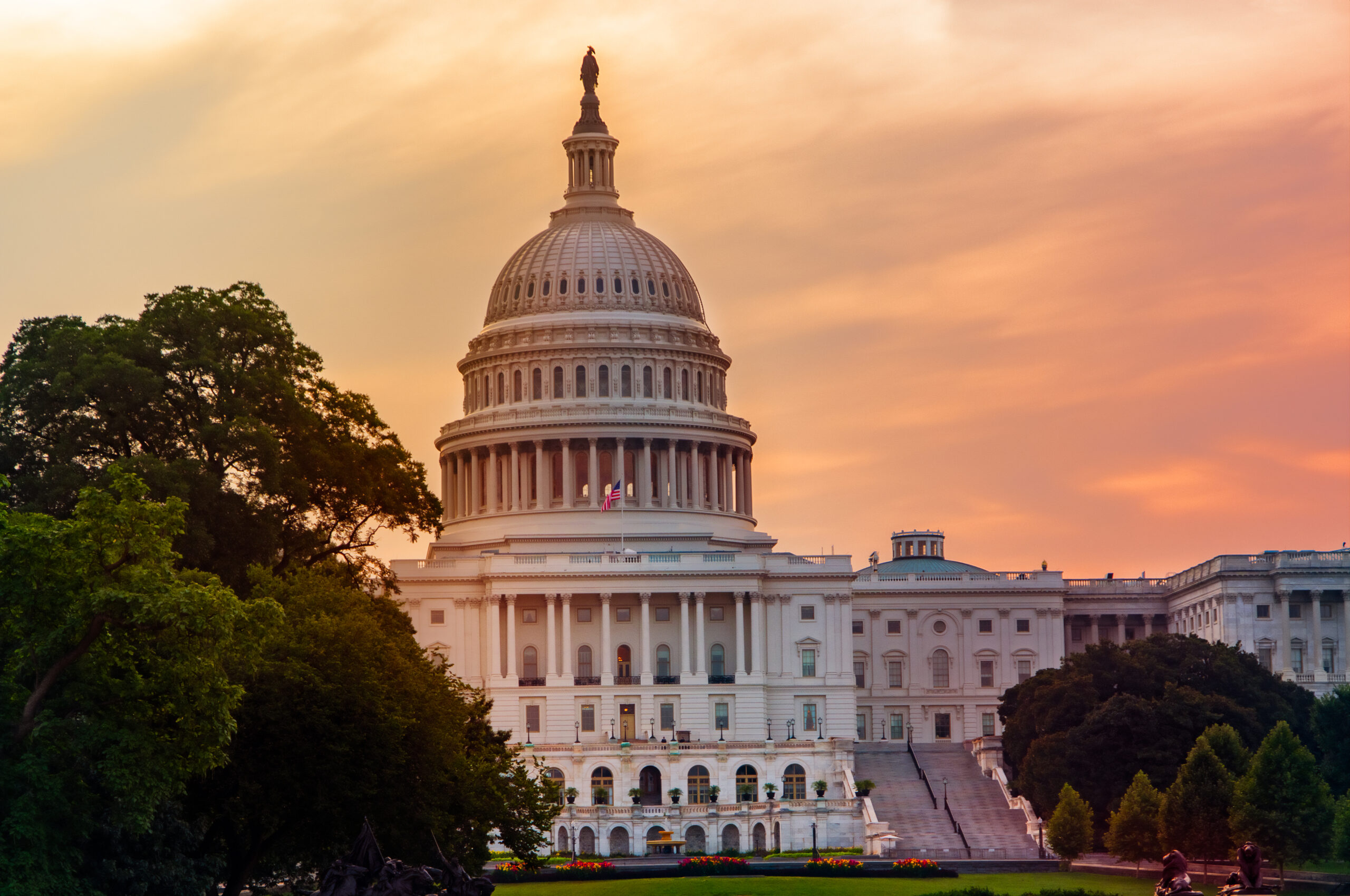
Yesterday, the President signed into law the Consolidated Appropriations Act of 2026 (H.R. 7148), which will fund the majority of the federal government through September 30, 2026; only funding for the U.S. Department of Homeland Security (DHS) is still subject to continued debate for the next two weeks.
This federal budget represents a strong bipartisan rejection of the President’s FY2026 Federal Budget Request. Following a year of intentional chaos and uncertainty around U.S. Department of Housing and Urban Development (HUD) funding, especially for Homeless Assistance Grants, the Alliance is pleased with the final result of this bill. The fight will continue, though, to ensure that communities receive the funding they need to address homelessness and housing affordability for those with the lowest incomes.
What You Need to Know
The final spending bill for Transportation, Housing and Urban Development (T-HUD) programs provides $77.3 billion for HUD programs in FY26. This amount is more than a $7.2 billion increase over the previous fiscal year, significantly higher than what both the House and Senate proposed in their respective spending bills introduced last year.
For those working on homelessness, here are the highlights:
Homeless Assistance Grants
As many of you know, FY25 funding for the FY2025 Continuum of Care (CoC) Program has been delayed. The bill includes funding considerations for FY25 and FY26.
| For FY25: Congress included language to ensure that FY25 renewal projects for CoCs are awarded in the timeliest manner possible. Specifically: |
| HUD must immediately non-competitively renew all projects expiring in quarter one (January through March) of 2026 for a 12-month period. |
| If HUD does not make awards by April, HUD must non-competitively renew all projects expiring in quarter two (April through June) of 2026 for a 12-month period. |
| If HUD does not make awards by July, HUD must non-competitively renew all projects expiring in quarters three and four (July through December) of 2026 for a 12-month period. |
| Projects awarded in this manner and under this provision cannot be penalized or deemed ineligible for any funding opportunity for FY2025 or FY2026. |
| For FY26: The overall funding amount is set at $4.417 billion, including: |
| $290 million for Emergency Solutions Grants (ESG) |
| $4.010 billion for the Continuum of Care Program. This includes a $52 million set-aside for projects to assist survivors of domestic violence, dating violence, sexual assault, or stalking, $107 million for the Youth Homelessness Demonstration Program (YHDP), and $10 million for the National Homeless Data Analysis Project. |
| The funding available for the CoC Program in FY26 is more than a $400 million increase from the FY2025 Full-Year Continuing Resolution. Because of the flat funding between FY2024 and FY2025, however, there will likely be a gap between the amount available and the amount needed to cover eligible renewals, including more than 200 projects awarded originally under the Special Notice of Funding Opportunity (NOFO) which were not eligible for renewal in FY2025. |
| HUD must keep Tier 1 funding—the amount of funding that is awarded based on CoC priorities—at 60 percent or higher. |
| HUD must release the FY2026 Notice of Funding Opportunity (NOFO) for the CoC Program by June 1, 2026 and make awards by December 1, 2026. |
Read the full FY26 Budget Analysis here.
Emergency Housing Vouchers
Although there was no new funding provided for Emergency Housing Vouchers (EHV), Congress allocated an additional $264 million to the Tenant Protection Voucher fund for the explicit purpose to transition EHV recipients to other rental assistance programs. Further, Congress authorized HUD to allow for greater flexibilities across other rental assistance programs that will make such transitions easier.
Demonstration of Collective Power
Last year, I called on all of us to use our collective power to demand both Congress and the administration preserve critical federal funding to prevent and end homelessness.
And did we ever.
It cannot be overstated how significant it is that Congress—in both chambers and across party lines—prioritized the inclusion of provisions to protect CoC Program funding against very real threats from the administration. This did not happen by accident. It is a testament to the thousands of people who elevated the concerns related to HUD’s handling of FY2025 CoC Program funding.
So thank you…for every email. Every phone call. Every sign on letter. Every meeting.
Let this be the proof point needed to keep us moving forward. Because this is not the end of the fight. We must now mobilize and build off the momentum that we have created.
We proved now that our advocacy works. We can prove it again, and again, and again.
Make sure you’re signed up to receive the Alliance’s advocacy alerts for opportunities to join advocacy trainings, receive resources and toolkits, be in the know on when to take action, and receive regular updates on policy and funding items and how we’re making progress together.
Let’s keep this momentum going.
You might also be interested in





Stay Updated: Solutions, Stories, and Ways to Make an Impact
Sign up to receive updates on the Alliance’s work, including the latest research, advocacy efforts, and real stories of progress — plus ways you can help drive lasting change.