








Table of Contents
Background
In 2016, HUD published a final rule in the Federal Register, entitled “Equal Access in Accordance with an Individual’s Gender Identity in Community Planning and Development Programs”(commonly known as the “Equal Access Rule”). This rule provided guidance to further ensure that individuals can receive equal access in housing and shelter funded under Office of Community Planning and Development (CPD)-administered programs, in accordance with their gender identity.
The Equal Access Rule requires recipients of HUD’s CPD funding – as well as owners, operators, and managers of shelters, and other facilities and providers of services funded by any CPD program – to grant equal access to such facilities and services in accordance with an individual’s gender identity. The Rule also requires that these services be provided in a manner that affords equal access to the individual’s family.
The 2016 Equal Access Rule, updated from its 2012 iteration, was very explicit in this mandate that access to shelter and housing must conform with, and adhere to, an individual’s self-expressed gender identity. It builds upon HUD’s 2012 “Equal Access to Housing in HUD Programs Regardless of Sexual Orientation or Gender Identity” rule, which concluded that further research was needed on how best to accommodate transgender and gender non-conforming people when there are shared sleeping quarters or bathing facilities.
Current Status
Equal Access Rule protections are currently under threat. An Executive Order in January 2025 directed HUD to conduct rulemaking to rescind the updated 2016 Equal Access Rule. In February, Secretary Scott Turner recently directed HUD staff to halt any pending or future actions to enforce the rule.
On April 28, HUD released a proposal to severely weaken the EAR and decimate the existing provisions protecting gender expansive communities’ equal access to critical housing and homelessness resources. This attack will impact all people experiencing homelessness and communities across the country.
Take Action Today
The proposed rule is open for public comment until June 29, 2026. We need your help to protect #HousingWithDignity! Submit a public comment in opposition using the public comment portal and tools produced by our partners at Trans Advocates for Equality. Here are two ways to take action today:
- Defending the Equal Access Rule: Strategies and Considerations for Public Comment. Submit a public comment in opposition using the public comment portal and tools produced by our partners at Trans Advocates for Equality. This webpage provides some context, considerations, and suggested TPs for shelters/providers submitting comments.
- Alliance Equal Access Rule Survey. The Alliance is conducting a survey of homeless service providers to better understand the anticipated impacts of HUD’s recent proposal, which primarily removes protections from the Equal Access Rule. Responses will support our ability to accurately inform decision-makers of the impacts of these proposed changes.
Advocacy Resources
Every person in the homeless response field has a role to play in defending the Equal Access Rule. The Alliance seeks to help decision makers at all levels of government understand the critical importance of the universal protections afforded by the Equal Access Rule, particularly for gender-expansive communities.
The following resources are intended to help advocates and providers have a better understanding of the Equal Access Rule.

Educational Materials
The following resources can help providers better understand the core components of the Equal Access Rule.
Alliance Webinar | | Equal Access Rule Advocacy: On a May 20 webinar, a nationwide network of advocates learned more about the Equal Access Rule and how to preserve this important federal protection.
More Educational Resources
Technical Assistance
Blog Posts
Research and Data
As understanding of gender identity evolves, provision of shelter and housing for gender-expansive individuals must also adapt and change. Data shows that this population disproportionately experiences homelessness: gender-expansive people face unique barriers when seeking housing, or accessing emergency shelter and services without discrimination or fear. These factors can lead to increased housing insecurity.
Federal data reveals that the number of gender-expansive people experiencing homelessness has increased rapidly since 2015, when gender categories were first included in annual homelessness counts. The following research and analysis can help researchers and advocates better understand unique threats facing gender-expansive communities and make the case for greater protections.
Nationwide Survey Shows Widespread Discrimination Against Gender-Expansive People, Including in Emergency Shelters

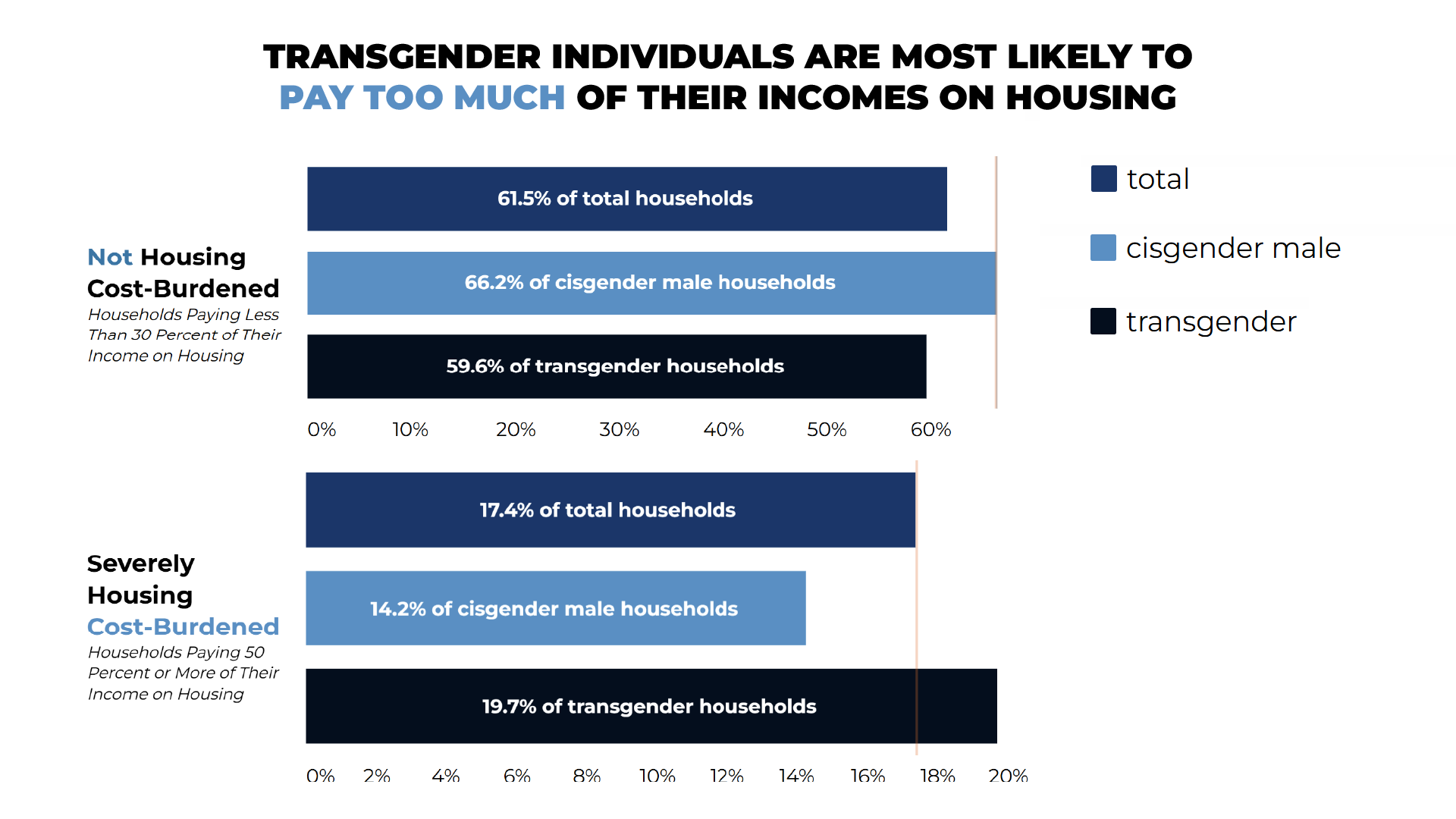
Federal Data Demonstrates the Need for Safe, Supportive, and Specific Housing for Gender-Expansive People

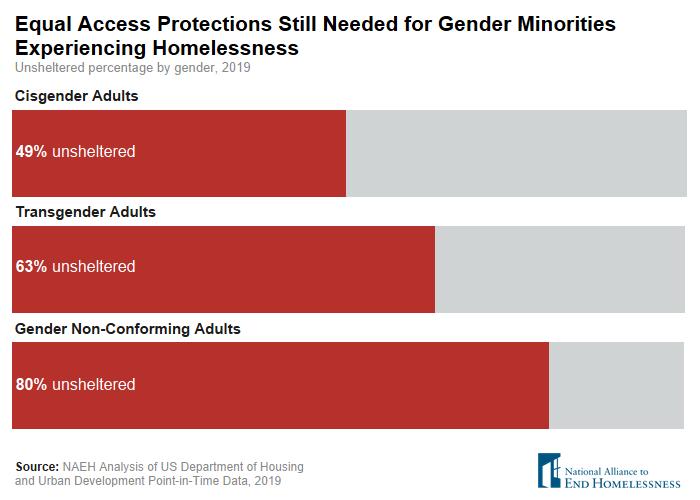
Data Snapshot: Trans and Gender Non-Conforming Individuals Experience Unsheltered Homelessness at Higher Rates

Ways to Get Involved
- Submit a Public Comment: Use the public comment resource portal to submit a comment in opposition before the deadline of June 29. You can submit a comment as an individual or as an organization.
- Gather Stories: If you or someone you know has faced barriers accessing shelter and housing resources based on gender identity, sexual orientation, or marital status — or has benefited from more equal access to housing and services — please fill out a questionnaire created by partners at SAGE, which serves LGBTQIA+ older adults.
- Identify Partners: Think about strategic partners in your community (i.e., elected officials, faith-based organizations, and/or domestic violence and sexual assault response service providers) who can lend different kinds of credibility to the issue and who be willing to submit a public comment.
- Educate Your Community: Start conversations with your staff, board, volunteers, and key decision makers in your community to educate them about the importance of this rule.
- Codify Protections in Your Community: Municipalities and states across the country should step up to protect access to housing and homelessness resources for all people. National partners are working on ways to support advocates at the local and state levels to help introduce proactive and protective legislation to serve gender-expansive people. Right now, you can identify legal gaps in your communities, including through reviewing state-by-state housing non-discrimination laws for LGBTQIA+ people.
To keep updated about the Equal Access Rule and how you can get engaged, please connect with the Alliance in the following ways:
Interested in
learning More?
Subscribe today to stay informed and get regular updates from NAEH