








In June, the Trump Administration announced a major restructuring of homeless services in America. It aims to shift $1.23 billion (nearly 30 percent of Continuum of Care program funding) away from permanent housing and toward other programs. An estimated 97,000 formerly homeless people could lose housing while future exit ramps out of homelessness drastically shrink. The logic behind this change is faulty. While systemic failures are at the root of homelessness, the administration blames the characters of unhoused people, research-backed programs, and a lack of innovation.
1. Homelessness is a Byproduct of the Affordable Housing Crisis and a Tattered Safety Net
The math is simple. Housing shortages plus government aid shortages equals homelessness. HUD’s plans to decrease the availability of permanent housing fail to fix these issues.
- Limited Availability of Affordable Housing. Nationwide, there are only 35 affordable and available rental homes for every 100 extremely low-income renter households.
- Limited Availability of Housing Assistance. Only 1 in 4 low-income households that need rental assistance get it. A mere 16 percent of people in the nation’s homeless shelters access permanent housing through the homeless response system.
- Limited Availability of Health Services. Many Americans can’t access physical and behavioral health care. Higher barriers exist for low-income people with limited insurance or the ability to pay for services. The One Big Beautiful Bill will soon make it even harder to rely on Medicaid for care. Left untreated, health conditions can unnecessarily worsen, contributing to homelessness.
The Administration is not adding new funds to address these critical shortages. Rather, it currently plans to shift existing resources among different providers and communities. Offering a diversity of program options is valuable — it allows for client choice and a greater likelihood of having specific needs met. However, reaching this goal can be accomplished without jeopardizing the housing of 97,000 people.
2. Housing First Is Associated with Reductions in Homelessness
Common wisdom holds that providing homes to people who don’t have them will end their homelessness. The Administration disputes this point, arguing that the Housing First approach (housing plus voluntary services) has failed. It is wrong.
- Solid Evidence for Housing First. Decades of research in America and internationally supports the effectiveness of the Housing First Approach. It has long been the basis of bipartisan Congressional and HUD policies. Most participants remain stably housed over time and the intervention is cost-effective. The Administration continues to refute this evidence by relying heavily on non-academic sources, omitting pertinent literature, misrepresenting or mischaracterizing literature, or selectively representing findings of research.
- But Homelessness Still Exists. While ignoring existing research, the administration argues Housing First doesn’t work because homelessness still exists. However, strategies are only funded to reach a small fraction of those in need. Federal funding increases have largely helped providers keep up with inflation, or rising costs, rather than increasing resources to the true scale of need. It is also essential to recognize that Housing First is an exit strategy for people already experiencing homelessness; it is not designed to stem the rapid flow of people losing their homes and becoming homeless—a total of 686,000 people each year.
- Underestimated Progress. HUD points to increased homelessness between 2013 and 2025 to argue that Housing First doesn’t work. However, it wasn’t until 2023 that the homelessness count surpassed historic highs and there was a record-setting increase that year. In 2024, HUD attributed the shift to the pandemic, including the expirations of eviction moratoria and federal relief for anti-poverty programs.
During the Housing First era, there has been progress on overall homelessness, but most significantly for some critical subgroups who are often prioritized for services. Their progress evidences the success of Housing First, not its failures.
| Group | Period of Sustained Decreases in Homelessness | % Decrease in Homeless During that Period |
| Overall | 2010 – 2016 | -17% |
| Veterans | 2010 – 2025 | -61% |
| Chronic (Individuals) | 2009 – 2016 | -28% |
| Families | 2010 – 2022 | -33% |
3. Painting An Accurate Picture of Programs and Approaches is Critical
Voluntary supportive services are an integral part of the work to end homelessness. Yet the Administration misrepresents existing services to justify its policy changes. It also ignores that the options it presents are not supported by research. Examples include:
- Truths About Where Treatment Occurs. HUD claims that transitional housing will ensure greater access to behavioral health treatment. However, the programs they seek to defund (PSH and RRH) also provide these services.
- Refocusing Mortality Concerns. There are efforts to link Permanent Supportive Housing (PSH) with mortality concerns. The administration fails to mention that HUD has historically encouraged communities to prioritize people with the greatest physical, behavioral, and aging-related challenges for these programs—this factor likely impacts mortality rates. Further, recent-year increases in overdose deaths match a broader societal trend that is now on the decline.
- Harm Reduction Helps. Research demonstrates the value of harm reduction strategies that meet people where they are such as Narcan/naloxone distribution, safe injection sites, syringe-exchange services, and fentanyl test strips. Such strategies are tied to reduce overdose deaths, better health outcomes, and reduced costs to healthcare systems. At least one (naloxone) has been endorsed by the White House. Yet, HUD suggests without evidence that harm reduction strategies are ineffective and bad for people. Moreover, defunding these services has been shown to cause harm.
- Forced Treatment Doesn’t Work. Despite states having established their own policies based on local considerations, the administration has pushed involuntary treatment as a solution. Existing research does not show that it produces positive results for people with substance use disorders and mental health disorders. In fact, research suggests that forced treatment costs more and harm a person’s health.
4. Innovation is Critically Important (When Done Right)
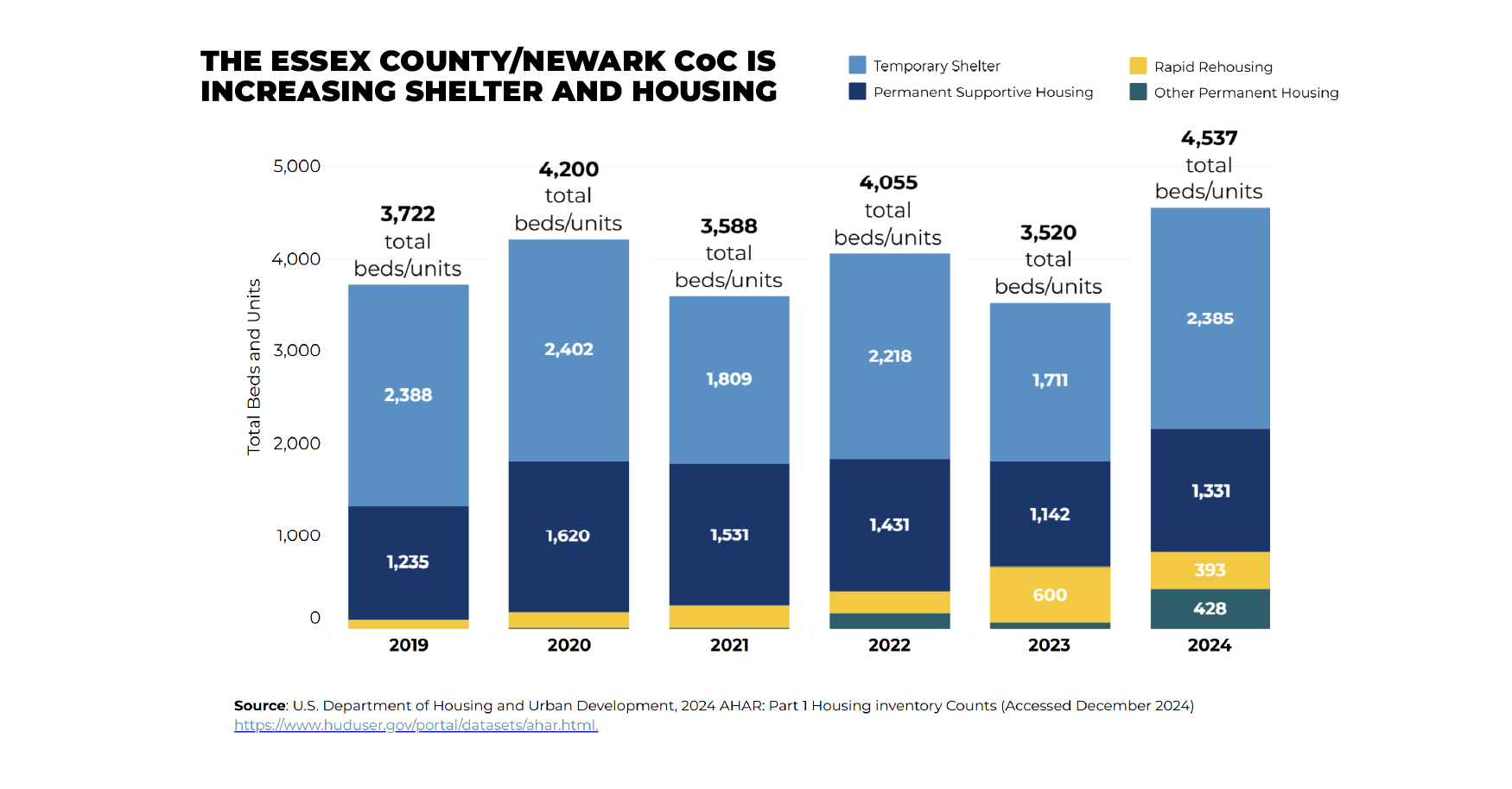
Innovation has helped homeless response systems to evolve. For example, Rapid Rehousing (RRH) originally emerged as an innovation within a small collection of communities. It eventually became a demonstration project, with Congress and HUD investing funds and monitoring the results. Multiple federal agencies became involved in examining and defining RRH. Over time, Congressional investment in RRH grew (alongside the growing evidence of its effectiveness). This process took at least seven years.
Today, Trump aims to massively defund RRH. Unlike the previous seven-year process to bring RRH to scale, HUD would redirect roughly a quarter of CoC program funds within just one year. Communities often lack the capacity to properly implement major program pivots, likely helping to explain why HUD’s investments in innovation tend to be more restrained. Unfortunately, the administration is leading communities into various struggles and failures that are avoidable when innovation is supported appropriately. Such an outcome fits within pattern of chaos, disrupting and destroying public services across a broad range of sectors.
5. Reducing Economic Hardships Requires Looking in Different Directions
In justifying its efforts to limit PSH funding, the administration blames residents and providers for their economic insecurity. In painting this picture, they hide the following:
- Many Are Not of Working Age. Fifty-eight percent of PSH residents are either children or older adults (55 and over). Although many don’t retire at 55, unhoused people develop age-related conditions earlier. And jobs at the bottom of the economic ladder often involve physical labor, which becomes more difficult as people get older.
- Many Have Disabilities. Since the program requires at least one household member to have a disability, 85 percent of adult PSH residents have some type of disability. Many can work, but some are unable or require accommodations.
- Many Face Discrimination in the Job Market. Existing evidence shows that older adults, people with disabilities, and people of color (who are overrepresented within homelessness) face discrimination in the job market.
- They Can’t Afford Housing. The gap between the federal minimum wage ($7.25/hr) and the nation’s required wage to afford a one-bedroom apartment ($29.19/hr) is significant. Even with employment, many formerly homeless people simply can’t afford housing without a long-term government subsidy.
Undoubtedly, all these factors contribute to the economic insecurity of PSH residents. However, the Administration often fails to mention these factors.
6. Permanent Housing Addresses Public Safety Concerns
The Administration cites no research indicating that people experiencing homelessness especially pose a danger to housed neighbors. While people with evident behavioral health conditions are often feared by community members, most studies find no significant relationship between severe mental illness (SMI) and future violent behavior.
Indeed, the administration agrees that unhoused people are more likely to be victims of crime than perpetrators. Being inside, and particularly behind a door that can be locked, is safer than living unsheltered. This concern is already a significant driver of system efforts to permanently house everyone experiencing homelessness—however, there are never enough resources to do so. Shifting the same amount of funding around to different programs won’t help.
7. Faith-Based Providers Are Already Critical Contributors to Homeless Response Systems
Ensuring that faith-based organizations can participate in the CoC program is another cited reason for the policy shifts. However, such organizations already receive an estimated 20 percent of CoC Program funds. Faith-based organizations such as the Salvation Army and Covenant House are major providers in communities across the country. The current Trump efforts do not mention or address disincentives for their participation. Further, no known interest groups or political parties have sought to block the participation of faith-based organizations in the homeless response system.
Conclusion
The Administration’s proposed changes are rooted in faulty logic and will have detrimental effects on homelessness response across the country. By shifting funding away from evidence-based solutions like permanent housing, everyone loses. Housing shortages, limited aid, and restricted healthcare all contribute significantly to the status quo. Reducing these proven stressors is how we end homelessness.
You might also be interested in


Stay Updated: Solutions, Stories, and Ways to Make an Impact
Sign up to receive updates on the Alliance’s work, including the latest research, advocacy efforts, and real stories of progress — plus ways you can help drive lasting change.