







The 2025 Budget Reconciliation Law, known as H.R.1, includes significant changes to the Medicaid program that will act as barriers to care for many people who currently have Medicaid health coverage. Some groups, like many immigrant groups, are no longer eligible due to the law. Many other people are expected to lose coverage not because they are no longer eligible for insurance, but because of the administrative burden (such as additional paperwork and online information submission) that the program places on them to prove their eligibility. Homeless services providers have the opportunity to assist those they serve in keeping their coverage and maintaining services, medications, and their health and stability.
What are the Work Requirements and More Frequent Eligibility Determinations for the “Medicaid Expansion” Population?
Individual barriers to coverage impact adults who qualify for Medicaid coverage, solely on the basis of income, rather than family or disability status. To enroll, the person had to prove only one thing to the state: low income. A person in this group may in fact be disabled, but the state’s records reflect only that they are low-income. States categorize these individuals as the “expansion population” meaning they did not qualify for Medicaid before the Affordable Care Act expanded eligibility to include nearly all legally residing adults (“Medicaid Expansion”). Generally, states that have not expanded Medicaid are not required to implement work requirements. The states may reference those subject to work requirements as “applicable individuals” and 20 million people are estimated to fall into this category.
What Is a Navigator’s Role in Keeping Patients Enrolled?
Anyone working with Medicaid enrollees who may be affected can help those individuals to maintain coverage by supporting them in meeting new state requirements. Many states, hospitals, health centers, primary care providers and legal aid organizations have a navigator program or application assister, a person trained to help individuals maintain their health care coverage. For example, for North Carolina residents can turn to North Carolina Med Help to help participants navigate their state’s Medicaid enrollment process. Homelessness services providers, can also help participants with Medicaid applications directly. While processes vary considerably by state, below is some high-level information to help educate staff and participants so that those who remain eligible can maintain their coverage.
What are the Barriers to Care, Services, and Health Insurance Coverage for Applicable Individuals?
Work Requirements
People in the expansion population must now prove they are earning at least $580 a month or are participating in 80 hours of community engagement prior to applying for Medicaid coverage. The $580 figure is based on working hours at the federal minimum wage. However, the $580 test applies to ALL states, even if the local minimum wage is higher. People who can prove $580/month income do not need to count hours.
Countable activities to meet the 80-hour community engagement requirement include:
- Employment, paid or unpaid or other organized volunteer activities
- Education, inclusive of GED attainment
- Participation in certain state approved employment and training programs
The look-back period is the window of time a state reviews to check whether you’ve been working before it decides whether you keep coverage. Most states check only for the past month. Some states, like Arkansas, Idaho, North Carolina, and Indiana, check the past three months instead. States may use that longer look-back at application, at renewal, or both. For example, if you are based in Arkansas and your renewal date is October 1, the state will check whether you worked at any point between July and September.
In addition to look-back periods, other things that will vary by state include minimum wage (how many hours you need to work to get to $580/month) and which activities count toward hours, as well as what are the automatic and paper processes to verify income or hours.
What Are Common Exemptions?
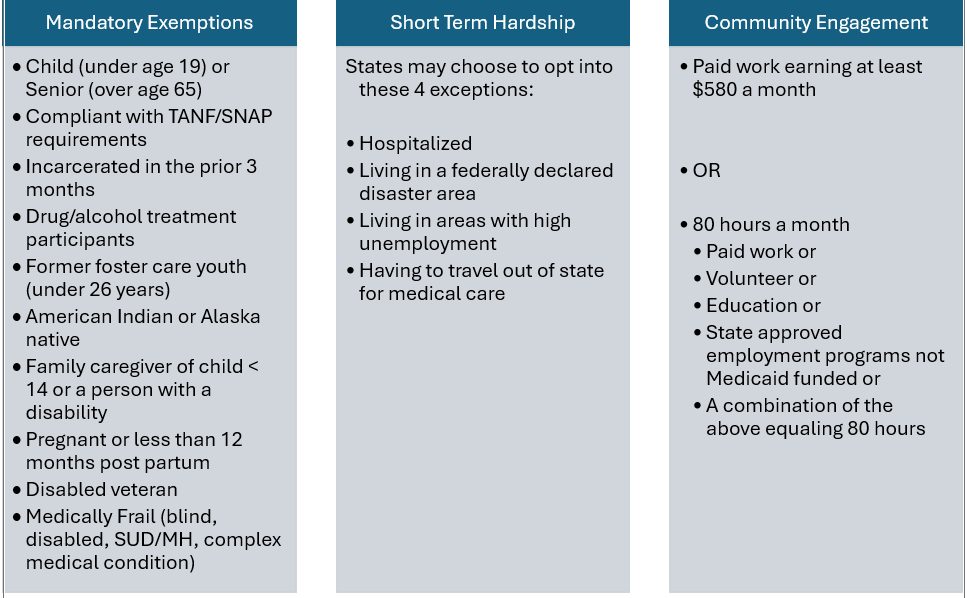
Figure 1 outlines the categories that make a person exempt from or compliant with work requirements. A state must first check internally with data systems that are connected to the state’s Medicaid Eligibility and Enrollment systems to see if a person is exempt or already compliant, as proven by data in those systems. If the data systems do not note compliance or exemptions, then the state reaches out to the individual via their current contact information in the Medicaid system to give the person the opportunity to prove compliance.
Mandatory Exemptions
There are two main pathways in which a person can be exempted from work requirements: mandatory exceptions and short-term hardships. All mandatory exemption categories are listed in Figure 1, and all are required by law. Recognizing short-term hardships is a state decision. The look-back periods and the need to reverify information are different for each exemption. Many exemptions will need to be proven at each 6-month renewal. Others, like medical frailty, will last for 12 months. Still others, like American Indian or Alaska native status, need to be documented only once.
Medical Frailty
Medically frail is a tricky exemption. As per the federal CMS Interim Final Rule (IFR), medical frailty (MF) will work a bit like disability status. That is, a person must prove both an MF condition exists and that that MF status makes them unable to work. State implementation requires three main steps:
- developing and maintaining a list of qualifying MF conditions,
- defining what constitutes proof, and
- deciding who is allowed to sign off on it.
States are still developing their processes to determine compliance. Many states plan to add plain-language screening questions to Medicaid applications to flag people who may qualify, so they can ask for follow-up documentation. States must also give members a chance to submit their own evidence of medical frailty. Webinars and training materials should be available this fall by states and advocates to educate those with or applying for Medicaid coverage and their supports.
Short-Term Hardship
In addition, if states have chosen to exempt those who experience short-term hardships, they can check to see if someone qualifies for one of those exemptions. Those exemptions are for people who are hospitalized, living in a federally declared disaster area, living in areas with high unemployment, or who have to travel out of state for medical care.
What are the Work Requirements?
If a person still appears to be subject to the requirement, the state will reach out beginning in September2026 to explain the new work requirement, including options like working, volunteering, or attending school, and how to comply.
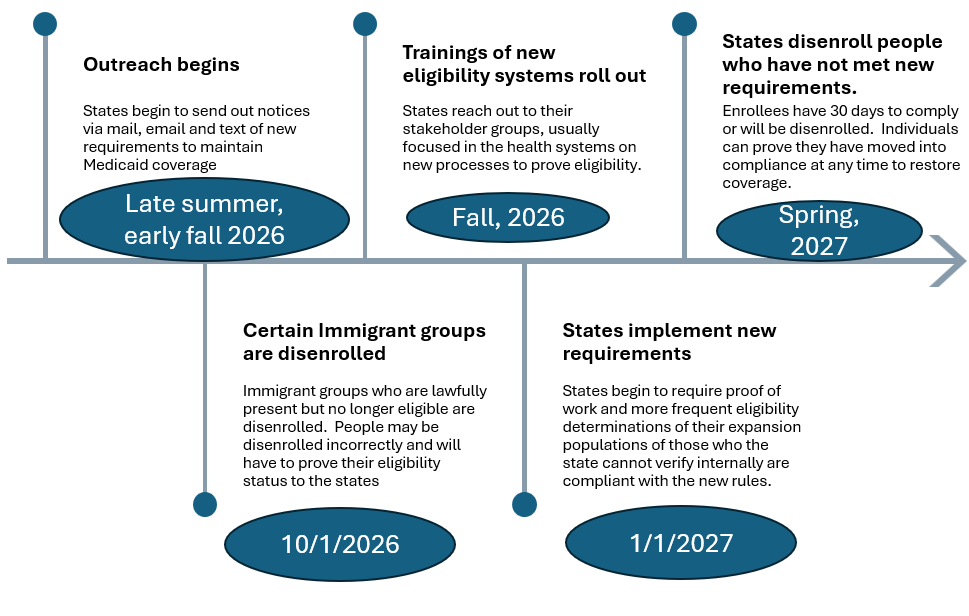
Figure 2 is a timeline of important dates to be aware of in this process. More frequent eligibility determinations
More frequent eligibility determinations
Also beginning in January 2027, individuals in the expansion population must also prove their continued eligibility once every 6 months, rather than annually. States will reach out to members via a variety of means, including text, email, and letter. States are urging existing Medicaid members to update their contact information as a helpful step individuals can take now.
All state systems are online, and 14 states now have a mobile app to help people share needed information with the state to keep coverage. Each state Medicaid website is also listed at Medicaid By State: Alternative Names and Contact Information. For people with a recent home address, you can help a person apply via HealthCare.gov. (This website uses addresses to confirm identity.) If the information submitted indicates a person might be eligible for Medicaid, the site will send you to your state’s system for enrollment.
What Can Homeless Services Providers Do to Help People Stay Enrolled?
General Agency efforts
- Designate a staff person to stay up to date as your state’s systems develop and timelines for renewal notices are announced.
- Provide a physical address for those who do not have one. Advocates are indicating that post office boxes will not be accepted as an allowable address.
- Watch the mail! Have an internal response developed for when someone is notified that their coverage may not continue. Make sure designated staff understand how to support the person to maintain coverage if at all possible. More on how states are reaching out to impacted recipients.
Get INFORMED
- Review state materials and sign up for state email lists that explain the systems the states are developing. Examples include Colorado, Hawai’i, Illinois, New York, Pennsylvania, Oregon, and Washington state. If your state has not developed a similar website, trainings, and training materials, reach out and advocate for them.
- Review advocate resource hubs. These may be national in scope, such as Eligibility & Enrollment – National Health Law Program and Medicaid – Community Catalyst, or state-specific, such as for California or New Jersey. Connect to local legal aid advocates who are tracking challenges and supporting people whose coverage is threatened incorrectly.
- Ask program participants what communications they have received. Get copies and note how key information, such as income, hours, and exceptions (e.g., medical frailty), is captured. Are there standard templates? Develop engagement and training events that use those real-world examples to better educate your staff and participants.
- States are developing their processes for tracking volunteer and community service work. Does your agency offer these opportunities? What process is needed to provide the required documentation so these activities can count as part of your state’s community engagement requirements?
- How do Medicaid eligibility appeals work in your state, and who can support? Full Medicaid benefits are retained while a participant’s case is appealed.
Networking
- Your health sector partners such as your local Health Care for the Homeless clinics likely will be better informed and better understand what these changes mean. Engage health partners for education, training, events, and support for your participants to keep their coverage. Health partners will often know which adults have Medicaid Expansion and their upcoming renewal dates as well as sign-off on medical frailty.
- Identify training materials, communications kits, and other health sector partner resources that can be adapted to inform staff and participants about what is changing and what people must do to keep their coverage.
- Are all homeless services impacted by these changes? Is there a community-wide response being developed? Is your COC creating one? Collaborate, partner, and share the load of these efforts.
Training for participants and staff
Use the Information gathered from the GET INFORMED section to create training that supports program participants and staff in navigating this change.
Collect Data
A. Track important information now to get ahead of implementation:
- Which participants have Medicaid Expansion coverage?
- Who is their Medicaid Managed Care Organization?
- Is their contact information up to date for Medicaid-related communications? Help them make sure that your state Medicaid program is communicating with them in the most efficient way possible.
- Which participants work (and may need support in documenting)? Do they meet the $580 threshold?
- Which participants may need support in documenting an exemption?
- Which health partners will sign off on disability and medical frailty paperwork? Get in place referral agreements and other collaborative efforts with these partners.
- Which entities can support members in appealing Medicaid eligibility denials? Again, create the partnerships and processes now that you will need in the future to support your residents.
B. Develop reporting and stories on how these changes impact your participants, mission, and efforts to end homelessness. Use information about coverage loss and unmet health care needs to engage and support efforts to make this process as seamless as possible.
Health insurance coverage is the pathway to primary care, behavioral health services, aging services, and access to medications. Without it, a person’s housing stability or their ability to exit homelessness is jeopardized. Existing materials and developing materials including a webinar series this fall will share more details and updates as this process develops. In the meantime, track what coverage your participants have, along with state any state communications about new requirements to maintain that coverage.
Additional Resources
Policy Hubs
- Work Reporting Requirements – Center For Children and Families
- Tracking Implementation of the 2025 Reconciliation Law: Medicaid Work Requirements | KFF
- Resource Library – National Health Law Program
The National Center for Housing and Health
The National Health Care for the Homeless Council
You might also be interested in



Stay Updated: Solutions, Stories, and Ways to Make an Impact
Sign up to receive updates on the Alliance’s work, including the latest research, advocacy efforts, and real stories of progress — plus ways you can help drive lasting change.